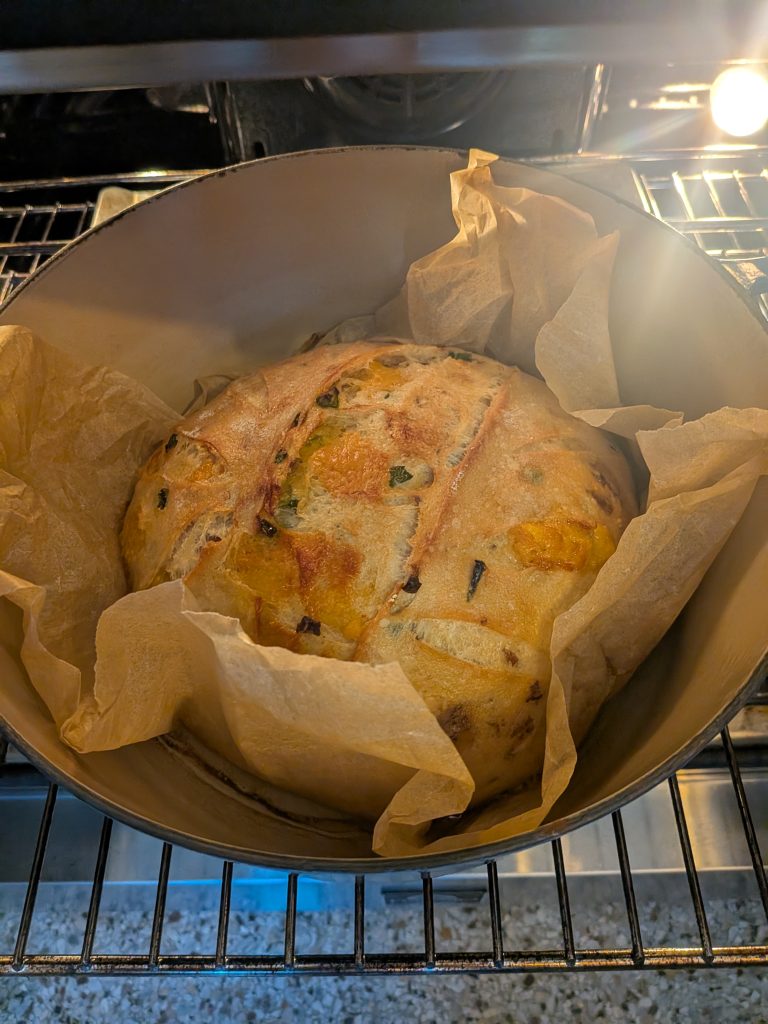
The Greatest Grilled Cheese Bread: Onion & Gruyère Sourdough
Welcome back to Matt’s Kitchen. Here at Doughn’t Knock It, we believe sourdough is a blank canvas just waiting to be loaded up with bold, savory ingredients. Today, we are channeling the ultimate comfort food into bread form: Caramelized Onion & Gruyère Sourdough.
Imagine the rich, deeply savory flavors of French onion soup, baked directly into a crusty artisan boule. The slow-caramelized onions provide a sweet, earthy depth, while the pockets of Gruyère cheese melt into gooey perfection. Whether you are serving it alongside a steak, dipping it in soup, or making the greatest grilled cheese sandwich known to mankind, this loaf breaks all the rules in the best way possible.
The Secret to Wet Inclusions
Adding onions to sourdough is a pro-level move, but it comes with a major trap: moisture. Raw or undercooked onions contain an enormous amount of water. If you add them to your dough, they will act like a leaky faucet, throwing off your carefully calculated hydration percentages and resulting in a dense, gummy crumb.
- Cook Them Down: You have to take the time to truly caramelize the onions. We are talking 40 minutes over medium-low heat until they are sticky, jammy, and reduced down to a fraction of their original size. This concentrates the flavor and removes the excess water.
- Cool Them Off: Never fold hot onions into your dough! Heat speeds up fermentation. If you laminate hot onions into your dough, you will accidentally supercharge your yeast and over-proof your bread. Let them cool completely to room temperature first.
Frequently Asked Questions (FAQ)
Can I use a different type of cheese?
Absolutely. While Gruyère is the classic pairing for caramelized onions, you can substitute it with sharp white cheddar, Swiss, or Gouda. The golden rule remains the same: cut the cheese into 1/2-inch cubes rather than shredding it so you get distinct cheesy pockets.
How do I stop the cheese from burning on the bottom of my Dutch oven?
When shaping your dough into its final boule, inspect the surface. If you see any pieces of cheese poking through the skin of the dough, use your finger to push them deep into the center and pinch the dough back together over the hole. Any exposed cheese will burn against the 500°F cast iron.
When is the best time to add the onions and cheese to the dough?
The lamination stage! After your initial stretch and folds, turn the dough out onto a lightly misted countertop and stretch it thin. Scatter the cooled onions and cheese cubes evenly, then fold it back up. This ensures the inclusions are distributed perfectly without tearing your gluten structure.

Caramelized Onion & Gruyère Artisan Sourdough
Ingredients
- 400 g Bread Flour High Protein
- 100 g Whole Wheat Flour
- 360 g Water Warm, ~80°F
- 100 g Active Sourdough Starter
- 10 g Fine Sea Salt
- 1 Large Yellow Onion thinly sliced
- 1 tbsp Unsalted Butter or Olive Oil
- 150 g Gruyère Cheese cut into 1/2-inch cubes
- 1 tsp Fresh Thyme Leaves Optional
Instructions
- Caramelize the Onions (Do this ahead of time): In a skillet over medium-low heat, melt the butter. Add the sliced onions and cook slowly for 30-45 minutes, stirring occasionally, until they are deeply browned and jammy. Remove from heat, drain any excess fat, and let them cool completely to room temperature.
- In a large mixing bowl, whisk the warm water and active starter together. Add the bread flour and whole wheat flour. Mix until a shaggy dough forms and no dry flour remains. Cover and let rest for 45 minutes to autolyse.
- Sprinkle the fine sea salt over the dough. Dimple it in with wet fingers and perform a series of stretch and folds for about 3-5 minutes until the dough builds initial tension. Cover and rest for 30 minutes.
- The Lamination Stage: Turn the dough out onto a lightly misted countertop. Gently stretch the dough out into a large, thin rectangle. Scatter the cooled caramelized onions, cubed Gruyère, and fresh thyme evenly across the surface. Fold the dough into thirds (like a letter), then roll it up. Place it back in the bowl, cover, and rest for 30 minutes.
- Perform 3 more sets of coil folds spaced 30 minutes apart to build strength and distribute the inclusions.
- After the last fold, let the dough rest untouched until it has increased in volume by about 40-50%, shows bubbles on the surface, and feels airy.
- Turn the dough onto an un-floured surface. Shape it into a tight, round boule. Crucial step: inspect the outside of the dough and poke any exposed cheese cubes deep into the center so they don’t burn. Place seam-side up into a rice-floured banneton.
- Cover the banneton securely and transfer to the refrigerator for 12 to 16 hours for the cold retard.
- Preheat your oven to 500°F (260°C) with a Dutch oven inside for at least 45 minutes. Turn the dough out onto parchment paper, score it, and transfer to the hot Dutch oven. Drop an ice cube under the parchment for extra steam, cover, and bake for 20 minutes.
- Remove the lid, reduce the oven temperature to 450°F (230°C), and bake for an additional 20-25 minutes until the crust is deeply caramelized. Cool completely on a wire rack before slicing.