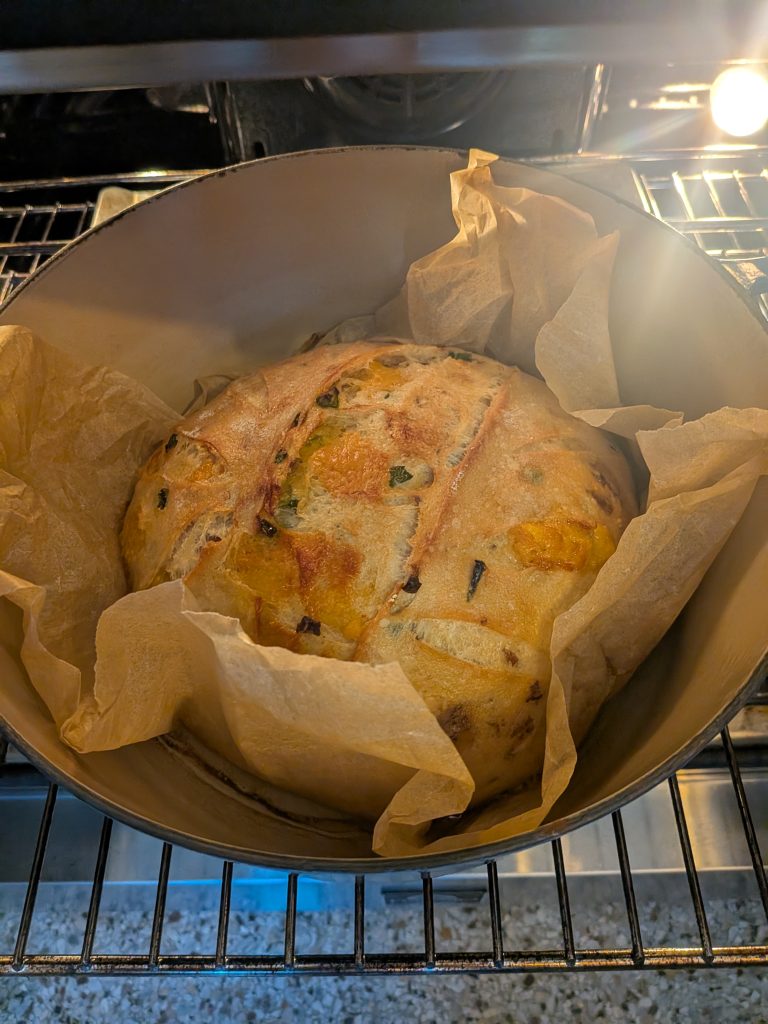
The Ultimate Charcuterie Bread: Fig & Honey Sourdough
Welcome back to Matt’s Kitchen. We spend a lot of time around here loading our bread up with savory, rule-breaking inclusions like jalapeños and cheddar, but today, we are crafting the ultimate cheese board centerpiece: Fig and Honey Artisan Sourdough.
This loaf is rustic, earthy, and perfectly balanced. The whole wheat flour provides a robust, nutty backbone, while the raw honey brings a delicate floral sweetness. But the real stars are the Mission figs, which create chewy, jammy pockets of flavor throughout the crumb. If you want to elevate your next charcuterie spread or make a mind-blowing prosciutto and brie sandwich, this is the loaf you need to bake.
The Golden Rule of Fruit Inclusions
Adding dried fruit to sourdough is a fantastic way to build flavor, but it comes with a major trap that catches new bakers every single time: the hydration thief.
- You Must Soak Your Fruit: Dried figs are like delicious little sponges. If you fold them straight into your dough right out of the bag, they will immediately begin pulling water out of your carefully hydrated dough matrix. The result? A loaf that feels stiff, dry, and bakes up like a brick.
- The Fix: Simply soak your chopped figs in a bowl of warm water for an hour before you start mixing. Drain them, pat them dry, and fold them in during the lamination stage. You get all the jammy flavor without sacrificing your airy crumb!
How to Serve It
This bread was born to be paired with cheese. Toast a thick slice, smear it with softened goat cheese or whipped ricotta, and finish it with a drizzle of hot honey and cracked black pepper. Doughn’t knock it until you try it.
Frequently Asked Questions (FAQ)
Can I use fresh figs instead of dried figs in sourdough? It is highly recommended to use dried, rehydrated figs for artisan sourdough bread. Fresh figs contain a massive amount of raw water. As the bread bakes, that water releases into the surrounding dough, resulting in a gummy, underbaked crumb. If you use dried figs that have been soaked and drained, you control the exact moisture level of your loaf.
Does honey kill sourdough starter? Raw honey does have natural antibacterial properties, but the amount used in a standard artisan loaf (about 25g) will not harm your wild yeast. In fact, the simple sugars in the honey act as fast food for the yeast. This means a honey-enriched dough will likely ferment and rise noticeably faster than a standard savory loaf.
How do I stop fruit from burning on the crust of my sourdough? The high heat of a Dutch oven (500°F) will instantly incinerate exposed sugars. When shaping your dough into its final boule, inspect the outside surface. Gently pick out any exposed pieces of fig, poke them deep into the center of the dough, and pinch the skin back over the hole.
Fig & Honey Artisan Sourdough
Ingredients
- 400 g Bread Flour High Protein
- 100 g Whole Wheat Flour
- 360 g Water Warm, ~80°F
- 100 g Active Sourdough Starter
- 10 g Fine Sea Salt
- 25 g Raw Honey
- 150 g Dried Mission Figs stemmed and roughly chopped
- Warm water for soaking the figs
Instructions
- At least 1 hour before mixing your dough, place the chopped dried figs in a small bowl and cover them completely with warm water. Let them soak to rehydrate. Right before you are ready to use them, drain them thoroughly and pat them dry with a paper towel.
- In a large mixing bowl, whisk the 360g of warm water, active starter, and raw honey together until the honey dissolves. Add the bread flour and whole wheat flour. Mix until a shaggy dough forms and no dry flour remains. Cover and let rest for 45 minutes to autolyse.
- Sprinkle the sea salt over the dough. Dimple it in with wet fingers and perform a series of stretch and folds for about 3-5 minutes until the dough builds initial tension. Cover and rest for 30 minutes.
- Turn the dough out onto a lightly misted counter. Gently stretch the dough out into a large, thin rectangle for lamination. Scatter the drained, rehydrated figs evenly across the surface of the dough. Fold the dough into thirds (like a letter), then roll it up. Place it back in the bowl, cover, and rest for 30 minutes.
- Perform 3 more sets of coil folds spaced 30 minutes apart to continue building strength and distributing the figs.
- After the last fold, let the dough rest untouched until it has increased in volume by about 40-50%, shows bubbles on the surface, and feels airy.
- Turn the dough onto an un-floured surface. Shape it into a tight, round boule, tucking any exposed figs into the dough so they don’t burn during baking. Place it seam-side up into a rice-floured banneton.
- Cover the banneton securely and transfer to the refrigerator for 12 to 16 hours for the cold retard.
- Preheat your oven to 500°F (260°C) with a Dutch oven inside for at least 45 minutes. Turn the dough out onto parchment paper, score it, and carefully transfer it to the hot Dutch oven. Drop an ice cube under the parchment for extra steam, cover, and bake for 20 minutes.
- Remove the lid, reduce the oven temperature to 450°F (230°C), and bake for an additional 20-25 minutes until the crust is deeply caramelized. Cool completely on a wire rack before slicing.
Notes
Fermentation Warning: Honey contains simple sugars, which are essentially fast food for your wild yeast. This dough may ferment and rise noticeably faster than your standard savory loaves, so keep a close eye on it during bulk fermentation!